
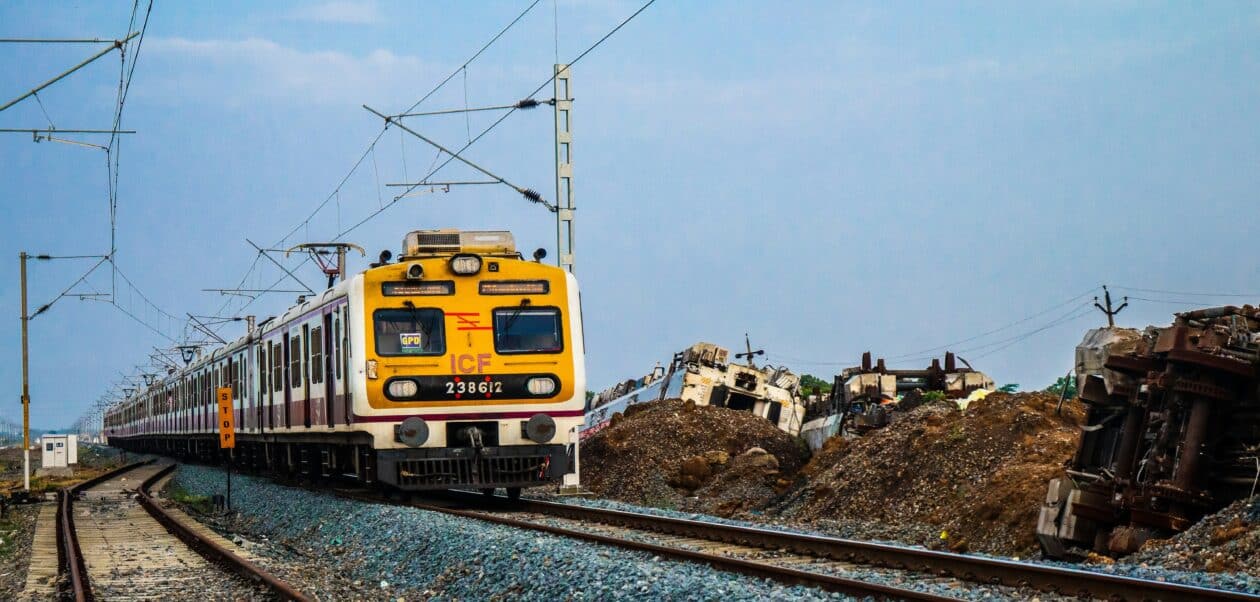
For millions of Indians, trains are more than just transport — they are stories on wheels. From sleepy hill routes to bustling metro lines, India’s railways hold memories of childhood trips, friendships formed between strangers, and the quiet poetry of slow travel.
Yet, as the world moves toward speed and innovation, one question keeps echoing louder: How safe is India’s rail system today?
In 2025, India rail safety has once again become a pressing national concern, not just for policymakers but for travelers, families, and dreamers who rely on the vast railway network to move through life. The focus on India rail safety measures, modern technology, and accident prevention is stronger than ever as the country works to build a safer, smarter, and more reliable railway future.
The Bilaspur Train Tragedy – A Painful Reminder
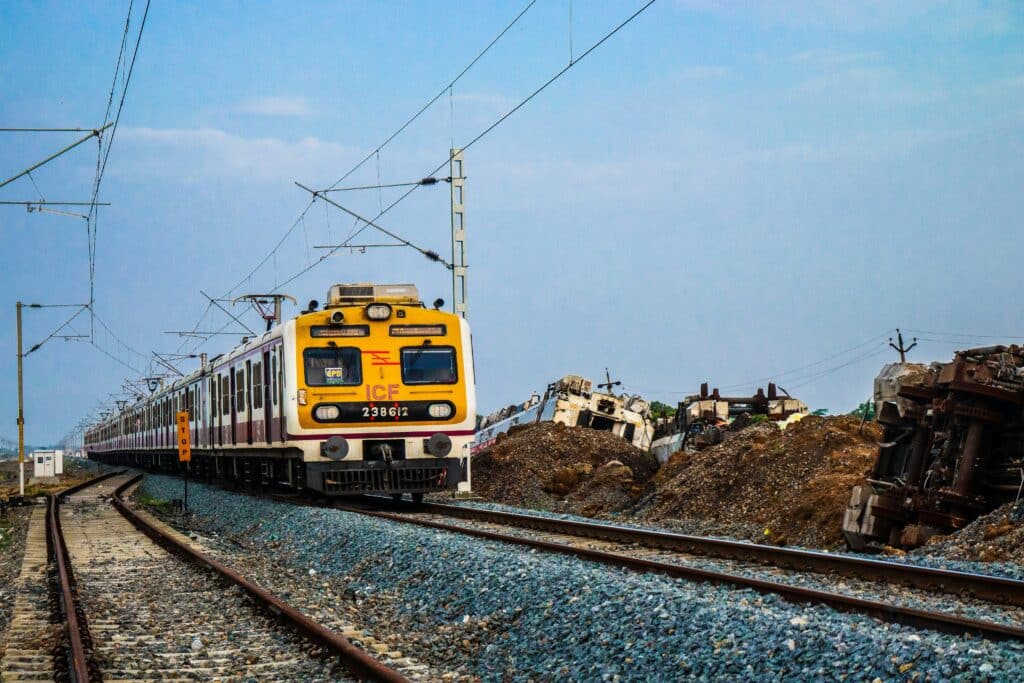
On Tuesday, November 4, 2025, tragedy struck near Bilaspur, Chhattisgarh, when a MEMU (Mainline Electric Multiple Unit) passenger train rammed into a stationary goods train. Several coaches derailed, killing and injuring passengers.
This wasn’t an isolated mishap — it was a mirror reflecting the cracks beneath India’s vast 68,000 km railway system.
Eyewitnesses spoke of confusion, delayed emergency response, and outdated signaling systems that failed to prevent the collision. The Bilaspur accident reminded the nation of the Balasore triple-train disaster of 2023 — and of the urgent need to revisit how we define safety in the context of rail travel.
What the Data Reveals About India Rail Safety
Official data from the Ministry of Railways (2024–25) paints a mixed picture. On the positive side, consequential train accidents (those causing loss of life or serious damage) have dropped from 135 in 2014–15 to just 31 in 2024–25. Similarly, rail fractures — one of the biggest causes of derailments — have reduced by over 88%.
These are significant improvements, thanks to stronger tracks, modern locomotives, and better maintenance.
But then, events like the Bilaspur tragedy prove that one accident can erase years of progress. India’s rail safety net, though stronger, still fails where human error, outdated signaling, or lapses in maintenance intersect.
“Even a single accident shakes public confidence,” notes a retired railway engineer quoted by The Hindu. “Technology reduces risk, but without disciplined execution, safety remains fragile.”
Kavach 4.0: India’s Promise of a Safer Railway
At the heart of India’s rail safety modernization plan is Kavach, an indigenous Automatic Train Protection (ATP) system designed to prevent collisions by automatically stopping trains if they exceed speed limits or approach danger zones.
As of November 2025, Kavach 4.0 is operational on nearly 3,000 route kilometers — mainly along the busy Delhi–Mumbai and Delhi–Howrah corridors. This rollout marks a significant milestone in India rail safety technology, demonstrating the nation’s push toward smarter, safer, and more efficient rail operations.
However, while the government had initially aimed for a 35,000 km rollout by 2027, internal reports now project a deadline extension to December 2025 for the first full phase, due to vendor approval delays and testing bottlenecks.
An allocation of ₹1,673.19 crore has been set aside for the fiscal year 2025–26 to accelerate deployment and strengthen rail safety measures in India.
This system has the potential to make India rail safety world-class — but only if implemented with consistency, transparency, and urgency.
Press Information Bureau – Kavach Updates (Government of India)
The Ground Reality: Why Technology Alone Isn’t Enough
Kavach can stop trains, but it can’t fix neglected tracks, human fatigue, or poor communication protocols.
Manpower shortages: The Railway Board’s data shows vacancies in critical safety categories like loco pilots and maintenance staff.
Aging infrastructure: Over 40% of bridges and culverts are more than 100 years old.
Lack of local accountability: Safety audits are often reactive, triggered after incidents occur.
For sustainable India rail safety, the solution must be holistic — combining tech with training, community awareness, and stricter safety culture.
A Traveler’s Perspective: What Safety Means on the Rails
For a traveler embracing the slow travel movement, railways represent something magical — a way to connect deeply with landscapes and people.
But when safety becomes uncertain, that magic fades into fear.
As someone who often travels by train through India’s heartland — from the misty ghats of West Bengal to the deserts of Rajasthan — I’ve seen both sides. A cheerful chai vendor on one trip, a delayed signal on another. Moments that remind me that beneath the beauty of slow travel, safety remains the invisible backbone of trust.
“Rail safety isn’t just about statistics. It’s about the confidence that you’ll reach your next destination — alive, inspired, and ready for the next journey.”
How the Future Can Be Different
India’s rail system can — and must — evolve. To truly transform India’s rail safety, three areas need urgent focus:
Speed Up Kavach Expansion
Complete the Delhi–Mumbai and Delhi–Howrah corridors, and extend to high-density zones like Chennai–Bangalore and Mumbai–Pune.Empower Local Safety Units
Instead of central audits, regional safety officers should have autonomy to conduct surprise inspections, especially in rural and freight-heavy zones.Build a Culture of Accountability
From station masters to train drivers, safety must become a shared mission, not just a checklist.
When safety becomes part of the travel experience — not just a regulation — the railways can once again be India’s safest and most romantic way to travel.
Final Thoughts: Slow Travel, Safe Travel
India’s rail safety is more than a policy goal — it’s a promise to every traveler who believes in the beauty of the journey.
The Bilaspur tragedy reminds us that progress and prevention must walk hand in hand. With Kavach 4.0, new infrastructure, and public pressure for accountability, India stands at a crossroads.
Slow travel can only thrive when safety becomes sacred. The next time we board a train — camera in hand, backpack ready — we should feel not just the rhythm of the rails, but the quiet confidence that we’ll safely arrive where our hearts want to go.
Read more: Lucknow’s Global Moment: UNESCO Honors Awadhi Cuisine