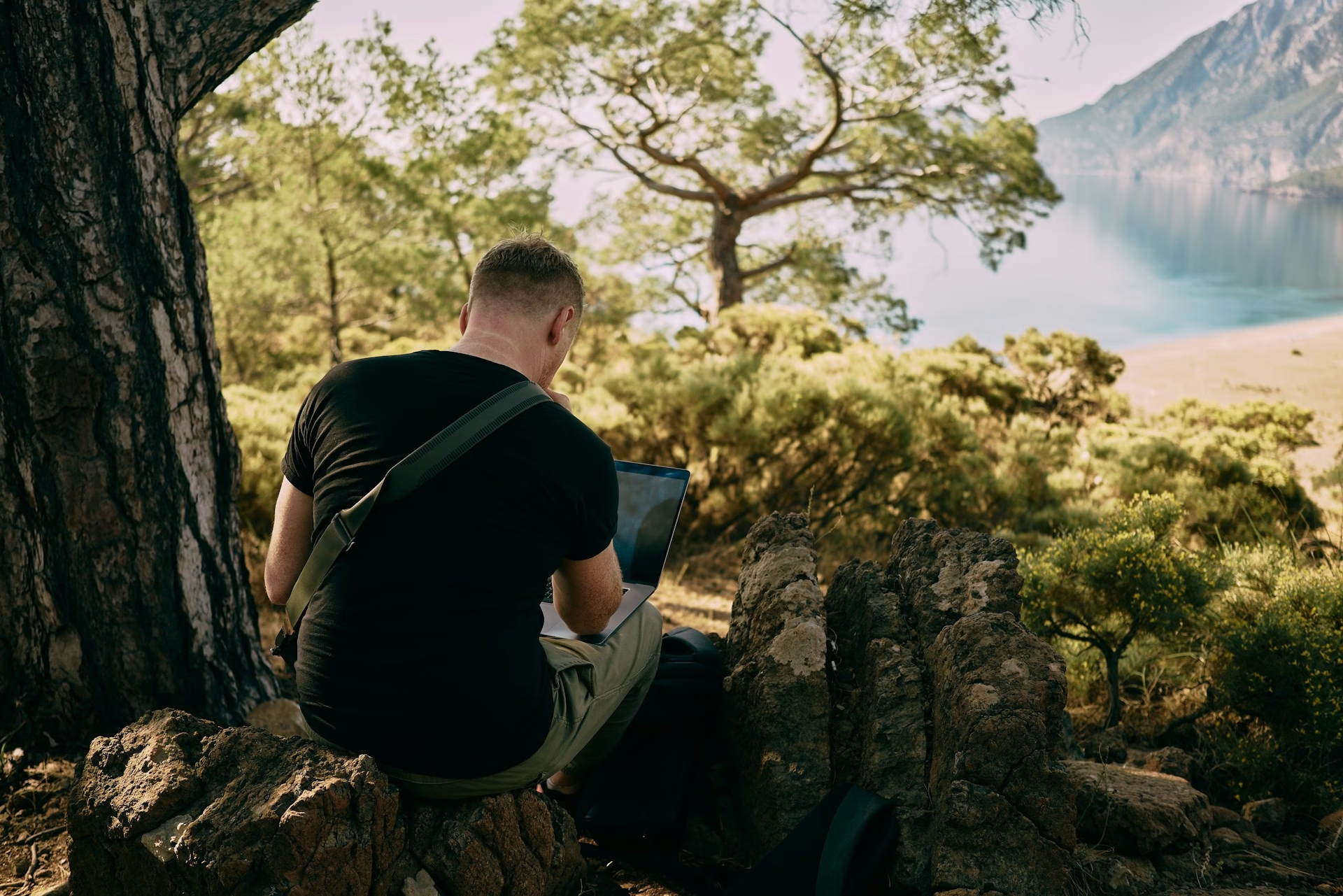

Imagine starting your day with strong Spanish coffee in Valencia, joining your morning call from a Lisbon café, and finishing the week with a sunset over Bali’s rice terraces.
For millions of professionals, this isn’t a fantasy — it’s daily life. The world of remote work has expanded faster than ever, and Digital Nomad Visa Countries 2025 are leading this quiet revolution.
As per GetGoldenVisa, more than 45 countries have now introduced Digital Nomad Visa (DNV) programs, creating a new era of borderless professionals. The shift represents something deeper than convenience — it’s a cultural redefinition of how we perceive “home,” “career,” and “freedom.”
What Is a Digital Nomad Visa?
A Digital Nomad Visa allows remote professionals to live in another country while working online for companies or clients outside that nation.
Unlike tourist visas, DNVs are designed for mid- to long-term stays — from six months up to five years — with simplified residency terms and often favorable tax conditions. Applicants typically need:
Proof of remote employment or freelance income
Minimum monthly earnings (usually between $1,500 – $5,000)
Valid health insurance
Clean criminal record
In essence, it’s a visa for lifestyle mobility — for those who work globally but wish to live locally.
As GetGoldenVisa notes, this growing framework is not just a convenience tool; it’s an economic strategy. Governments are competing to attract “digital citizens” who bring spending power, cultural exchange, and innovation without taking local jobs.
Top Digital Nomad Visa Countries 2025
🇪🇸 Spain
Spain’s Digital Nomad Visa remains a favorite for creative professionals and tech freelancers. Applicants earning €2,600 per month or more can live for up to five years, with reduced taxes for their first six years under Spain’s “Beckham Law.”
Beyond paperwork, Spain’s allure lies in lifestyle — morning churros, siestas, tapas evenings, and the vibrancy of Barcelona or Valencia. In 2025, Spain has seen a surge in remote communities who call the Iberian Peninsula their “office with a view.”
🇵🇹 Portugal
The Portuguese D8 Visa, recognized by GetGoldenVisa.com as one of Europe’s most attractive, requires a monthly income of €3,280. The best part? After five years, nomads can apply for permanent residency or even citizenship.
Portugal consistently ranks among the world’s most livable countries thanks to its affordability, safety, and warm culture. Lisbon’s tech scene, Porto’s art-filled cafés, and Madeira’s stunning coasts make it a top pick for remote professionals looking to balance work and wellness.
🇭🇷 Croatia
Croatia’s Digital Nomad Residence Permit offers one year of stay for non-EU citizens earning at least €2,539 per month, with zero local taxes on foreign income.
Beyond its legal simplicity, Croatia’s Adriatic coast — from Dubrovnik to Split — has become a remote worker’s paradise. With breathtaking beaches, ancient towns, and a growing coworking scene, it’s no surprise Croatia is now one of Europe’s most in-demand destinations for nomads.
🇪🇪 Estonia
Estonia pioneered the Digital Nomad Visa in 2020, setting the benchmark for e-governance. The Baltic nation welcomes applicants earning €4,500 per month for stays up to a year.
What makes Estonia unique is its e-residency program, allowing entrepreneurs to launch and manage EU-based companies entirely online. As remote business structures evolve, Estonia continues to be a case study in how nations can merge innovation with inclusivity.
🇮🇩 Indonesia (Bali)
Bali has long been the spiritual home of digital nomads. Now, Indonesia’s Second Home Visa makes it official. Remote workers showing $130,000 in savings can live for up to five years — surrounded by beaches, coworking hubs, and community spaces.
While it’s not a classic “nomad visa,” its benefits mirror one. Bali’s Canggu and Ubud districts have evolved into cultural melting pots where yoga instructors, developers, and writers coexist in perfect balance.
🇲🇺 Mauritius
For those craving turquoise waters and peace, Mauritius’s Premium Visa is an underrated gem. With just $1,500/month in income, remote professionals can stay for a year and renew easily.
Mauritius combines tropical beauty with strong digital infrastructure, low crime, and a welcoming multilingual society. It’s a serene alternative to the usual European or Southeast Asian circuits.
🇬🇪 Georgia
Georgia’s Remotely from Georgia program allows visitors earning $2,000/month to stay for up to a year. It’s one of the simplest visas to apply for — fully online and quick to process.
Tbilisi’s blend of Soviet architecture, modern cafés, and creative communities makes it ideal for remote professionals seeking affordability and culture. Georgia’s hospitality (and khachapuri!) makes every visitor feel like family.
🇲🇽 Mexico
Mexico’s Temporary Resident Visa offers up to four years of stay for those earning $2,500/month or holding savings of $43,000.
With thriving digital hubs in Mexico City, Guadalajara, and coastal Oaxaca, the country’s blend of modernity and tradition continues to draw global workers. Remote professionals often highlight Mexico’s affordability, cultural warmth, and diverse landscapes — from mountain villages to surf towns.
🇦🇷 Argentina
Argentina’s Digital Nomad Visa, launched recently, allows six to twelve months of stay with simple online applications.
Buenos Aires, often dubbed the “Paris of South America,” offers European-style architecture, tango rhythms, and one of the world’s most creative freelancer communities. Affordable living costs and rich culture make Argentina a rewarding base for long-term nomads.
🇧🇧 Barbados
Barbados’s Welcome Stamp Visa, introduced soon after the pandemic, remains a pioneer. Applicants earning $50,000/year can live on the island for 12 months, surrounded by crystal waters and strong internet infrastructure.
The Barbados government actively supports remote professionals, with coworking spaces, community events, and digital infrastructure designed for seamless productivity — all under Caribbean sunshine.
The Expanding Map
According to GetGoldenVisa, several countries are now drafting their own digital nomad frameworks.
Japan plans to pilot its version by 2026, while South Korea and Sri Lanka have already announced “Workation Visa” programs aimed at attracting remote professionals.
This shift signals a new global competition — not just for tourists, but for talent. Nations are realizing that remote workers bring innovation and spending without straining local job markets.
Why This Movement Matters
Digital Nomad Visas aren’t simply about escaping offices; they’re about redefining purpose.
They allow people to live intentionally — working from inspiring places while contributing to local economies.
According to the OECD Tourism Trends 2025, digital nomadism is now a recognized contributor to sustainable tourism and economic decentralization. Nomads stay longer, spend locally, and often help build creative micro-economies around coworking and co-living spaces.
It’s not tourism anymore — it’s a lifestyle built around freedom and global connection.
Before You Apply
Before applying for a Digital Nomad Visa, remember:
Use only official government portals for applications.
Have valid health and travel insurance covering your host country.
Understand tax implications — staying beyond 183 days can trigger residency status.
Connect with digital nomad communities through platforms like NomadList or Meetup to integrate smoothly.
Small preparation steps can save you big headaches later — from visa extensions to local tax clarity.
The New Way of Living
For decades, our lives revolved around where our jobs were.
In 2025, the equation has flipped: we choose where we live, and the work follows.
The Digital Nomad Visa is not merely a legal document; it’s a cultural symbol — a passport to purposeful living. It’s about trading cubicles for coastlines, boardrooms for beaches, and the old 9-to-5 for meaningful exploration.
In the end, “home” isn’t a fixed address.
It’s wherever your Wi-Fi connects — and your heart feels at peace.
FAQ
Georgia and Mauritius offer some of the easiest Digital Nomad Visas with simple online processes and low income requirements.
Some countries like Portugal and Spain allow permanent residency after five years on a Digital Nomad Visa.
Read more 5-minute Indian snacks to fuel your journey with flavor:- https://nomadjourney.in/quick-indian-meals-for-travelers-5-minute-recipes/