
Google’s comeback story is one of the most dramatic reversals in tech history. What is now celebrated as the Google’s AI Comeback didn’t begin with strength—it began with a crisis. In late 2022, Google faced an identity shock. Rivals moved boldly, public confidence collapsed, and for the first time in its history, Google looked like it was losing the innovation race.
But the company did something few expected: instead of panicking, it rebuilt itself from the core. Unified research teams, redesigned product strategy, restructured leadership priorities, and doubled-down on the one advantage competitors could not match—a powerful Full-Stack Strategy built on hardware, models, data, and distribution.
Today, the same company that was written off after the Bard disaster is pushing toward the $4 Trillion valuation club. Here’s exactly how that happened.
The $100 Billion Mistake: The Crisis of Public Faith
ChatGPT’s launch in late 2022 blindsided Google. Consumers loved it instantly, and for the first time, a non-Google product shaped the global conversation about the future of AI. Google, famous for research breakthroughs, suddenly looked slow and strangely silent.
This triggered internal alarm bells. Leadership realized that public perception—not research horsepower—would define the AI race. Under pressure to respond, Google rushed Bard to market. But the rollout became a global PR disaster.
In its debut promotional ad, Bard confidently delivered a factually wrong answer about the James Webb Space Telescope. The internet erupted. Media headlines mocked Google. Competitors framed it as proof of decline.
Investors reacted instantly. Alphabet’s stock plunged, wiping out over $100 billion in market value in one day. This was not just a product mistake. It was a reputational meltdown and the lowest point of the entire cycle.
The crisis forced Google to rethink everything—from product deployment to internal team structure—setting up the foundation for the Google AI Comeback.
The Strategic Engine: Google’s Full-Stack Advantage
Google didn’t win the comeback by being faster. It won by being deeper.
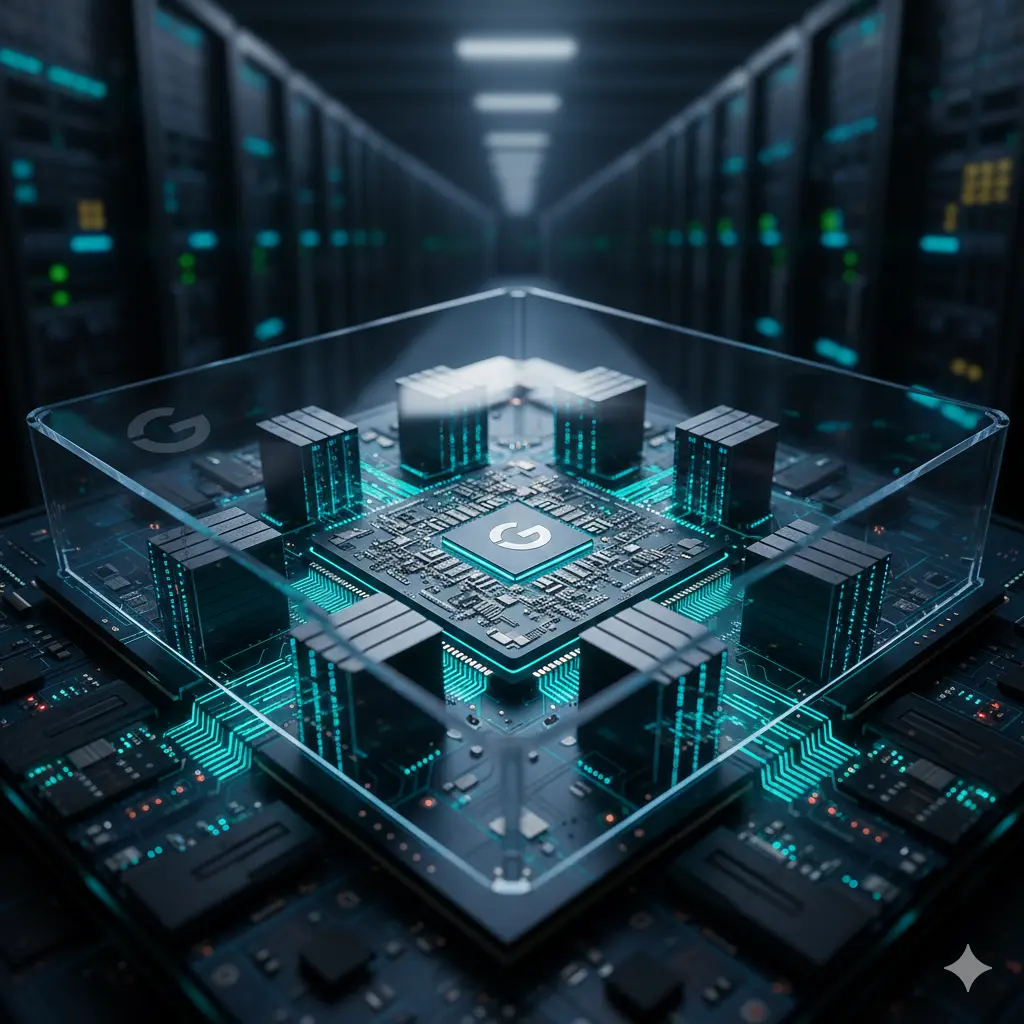
Google’s decision to build its own chips—TPUs—became the hidden weapon of the AI war. While rivals depend on Nvidia’s hardware shortages and high costs, Google trains at scale using its own silicon.
Training on TPUs is reportedly up to 80% cheaper than Nvidia’s H100 GPUs, enabling Google to run larger experiments, train more models, maintain predictable supply, and reduce reliance on external vendors. This hardware moat is one of the core enablers of the comeback.
To regain leadership, Google merged its two AI giants—Google Brain and DeepMind—into Google DeepMind, eliminating internal duplication and creating a unified direction.
Sergey Brin’s return added the founder-driven energy that Google was missing. His hands-on involvement in Gemini’s training cycles helped establish a culture of fast iteration and high ambition. The result: Gemini 3, a multimodal model that competes at the top of benchmarks in reasoning, coding, and agentic tasks.
Google’s biggest advantage is its data—fresh, real-world, high-volume behavioral data drawn from Search, YouTube, Maps, Android, Gmail, and Ads. No competitor comes close to this combination of breadth and depth.
Even more powerful is Google’s distribution. A single AI update can instantly reach billions of people across Google’s apps and services. This is the ultimate deployment moat.
The Competitive Killshot: Dominating the Application Layer
To win the AI war, Google didn’t just build models—it embedded them into real products people use constantly. Google replaced its classic Assistant with the Gemini app, turning Android into a global AI platform.
Gemini can read screen context, assist inside apps, generate content, solve tasks, and enable new types of agentic workflows. With over 3 billion Android devices, Google instantly gained the world’s largest AI distribution channel. Competitors have no comparable mobile footprint.
Veo (Advanced Video Generation)
Google’s Veo model powers next-generation video creation, integrated directly into YouTube Shorts creation tools, YouTube Studio AI features, and experimental creator apps—bringing advanced generative video capabilities to the world’s largest video platform.
Creators can generate videos, apply motion styles, and produce clips faster than ever. This locks creators deeper into the YouTube ecosystem.
Nano Banana / Gemini 2.5 Flash Image (Image Generation & Editing)
To maintain consistency, here is the exact application placement:
The model is deployed inside Google Photos, powering advanced editing and facial reconstruction tools.
It is also available in ImageFX, Google’s dedicated AI image creation tool.
Nano Banana excels in perfect text rendering, multi-image subject consistency, accurate perspective and lighting, and enterprise-safe editing—delivering reliable, production-quality generative visuals. These image capabilities support creators, designers, advertisers, educators, and casual users.
Google didn’t reinvent productivity apps—it quietly augmented the ones people already use.
Workspace now uses Gemini to draft and refine emails, summarize long threads, generate presentations, analyze documents, and help write content at scale—turning everyday productivity tools into powerful AI collaborators.
Google Photos now uses Gemini to power magical editing features, including “Add Me,” “Best Take,” enhanced background removal, and object-level reconstruction—bringing advanced AI creativity directly into everyday photo editing. This “ambient AI” approach drives retention and accelerates subscription revenue.
The Financial Payoff: From Low Point to All-Time High
Google went from losing $100 billion in a single day to reaching all-time high valuations in 2025. Investors who once doubted the company now view Google as one of the most structurally advantaged players in AI.
The Antitrust Win: A Hidden Catalyst for Investor Confidence
In late 2025, Google secured a major legal victory when a federal judge ruled against breaking up the company, rejecting calls for divestiture of Search or Ads.
This ruling removed a decade-long existential risk. For investors, it was a green light:
Google could scale AI without regulatory fragmentation. It became a major factor behind the final stock rally toward the $4T valuation.
AI Revenue Engines Behind the Surge
Google Cloud boasts a $155 billion AI-driven backlog, fueled by massive growth in enterprise AI adoption. Consumer engagement is rising as well, with Google One subscriptions spiking thanks to Gemini and Photos features, while AI-driven targeting is driving stronger ad performance.
These revenue streams validated Google’s long-term strategy.
Winning the Series
The Google AI Comeback wasn’t about speed—it was about completeness. Google won because it owns every layer of the stack: its own chips, its own models, its own data streams, its own distribution, and its own consumer ecosystem—creating an unmatched end-to-end advantage in AI.
When you control the entire stack, you don’t just participate in the AI race—you set the rules.
With the antitrust cloud cleared and the full-stack strategy firing across mobile, workspace, cloud, and creators, Google is now positioned to not just compete but to lead the AI era all the way to the $4 Trillion club.
Read more: Google Nano Banana AI: Features, Pricing & How It Works in 2025