
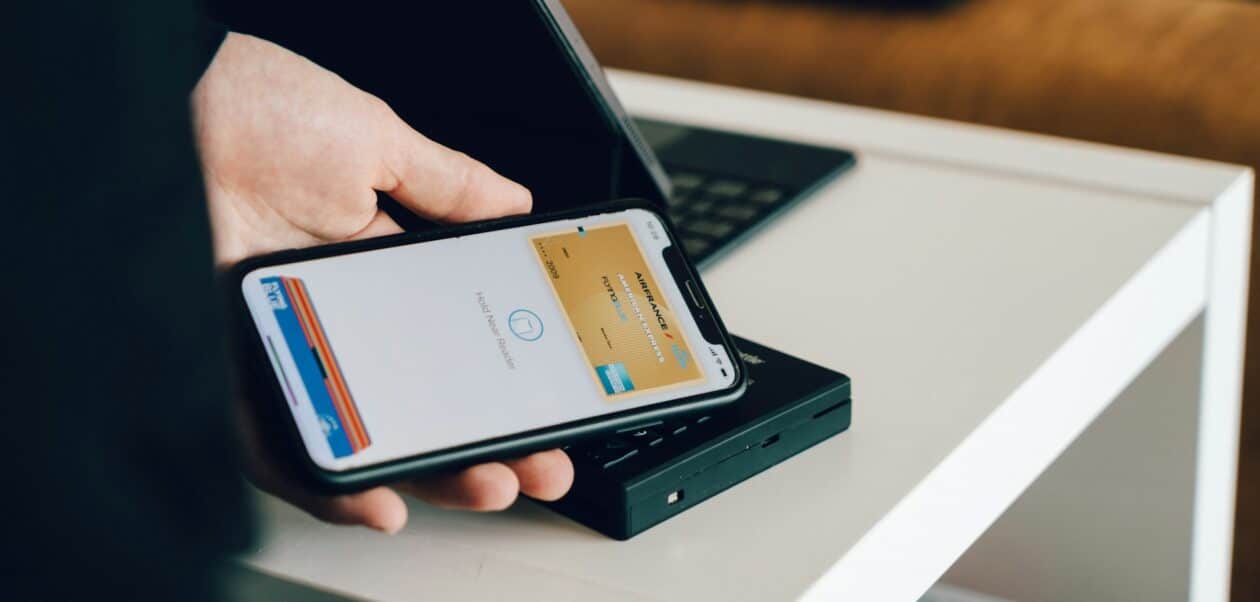
For decades, a passport has been more than just a travel document—it’s proof of who we are and where we come from. Every stamp tells a story: the thrill of a first trip abroad, a reunion years in the making, or a journey that changed us forever.
Now, that familiar booklet is getting a high-tech companion. Apple’s new Digital ID feature, which lets U.S. travelers store their passport information safely inside Apple Wallet, is transforming an iPhone or Apple Watch into a verified ID at more than 250 TSA checkpoints across the country.
It’s the next big step in how we prove who we are—and a glimpse into a future where identity lives on our devices, not just in our pockets. The Digital Passport is here, and it signals a revolution not just in convenience, but in privacy and personal control.
The Mechanics of the Digital Passport Shift: From Paper to Pixels
Setting up a Digital Passport is surprisingly simple and secure. Inside the Apple Wallet app, travelers tap the “+” button, select Digital ID, and begin the verification process. The iPhone is used to scan the photo page of their U.S. passport and, crucially, reads the embedded NFC chip to cryptographically verify the data’s authenticity. A quick selfie and a short facial-movement check confirm the identity belongs to the device’s owner.
Once added, the Digital Passport is locked by Face ID and hardware-level encryption. Presenting it feels like using Apple Pay—double-click the side button, choose your ID, and hold your device near a TSA scanner. You stay in control: you can review precisely what data is being shared before approving it. Even Apple explicitly states it cannot see when or where the ID is used.
Currently, the system is in beta testing across a dozen states and Puerto Rico, but Apple plans to expand nationwide—and eventually, internationally. This technological framework sets the stage for the true Digital Passport future.
The Cultural Shift: Identity in the Age of the Digital Passport
This is more than a tech update; it’s a cultural one.
A physical passport has always been a deeply personal artifact—the faded cover, the stamps, the memories. Moving it into the digital realm changes how we relate to identity itself. The rise of the Digital Passport forces us to confront uncomfortable questions:
Who truly controls your information—you, the government, or the company managing the encryption?
What happens to the emotional and cultural meaning of travel when the tactile record of our journeys becomes virtual?
The Digital Passport certainly makes travel smoother, but it also pushes us to reflect on how technology is reshaping what it means to belong and what we choose to carry with us on our journeys.
Trust and Security: Innovation Meets Oversight
Apple emphasizes privacy at every step. All passport data stays encrypted and stored locally on your device’s Secure Element, accessible only through biometric authentication. That design ensures that your Digital Passport remains uniquely yours and highly resistant to tampering.
At launch, the feature is limited to TSA checkpoints for domestic travel, but future updates could allow users to securely verify their identity for age-restricted purchases, event entry, or even online authentication.
Selective Disclosure: The Digital Passport’s Core Privacy Advantage
The most significant security leap offered by the Digital Passport isn’t encryption; it’s a concept called Selective Disclosure. Traditional identity documents operate on an all-or-nothing principle: to prove you are over 21, you must show a physical license that reveals your full name, exact date of birth, home address, and photo.
The Digital Passport fundamentally changes this. Using secure, verifiable credentials, your device can present only the minimum necessary information required for a transaction. For example, when buying a beer, your iPhone can simply share the cryptographic proof: “User is verified to be 21 or older,” without ever sharing your name, date of birth, or photo. This granular control dramatically minimizes the risk of casual identity theft and gives the user unprecedented power over their personal data—a crucial element for the privacy-conscious global traveler.
Still, as identity systems go digital, security experts warn that centralization of data and reliance on infrastructure brings new vulnerabilities. Even with encryption, technology is only as trustworthy as the humans and systems behind it. The balance between privacy and convenience remains delicate—and deeply human.
The Future of Borderless Travel
The Digital Passport is the final piece in Apple’s long-running plan to replace the physical wallet. With payments, tickets, hotel keys, and now identity stored in one place, travel could soon be as simple as carrying a phone.
Globally, similar efforts are gaining momentum. The European Union is forging ahead with the EU Digital ID Wallet, a framework that will allow citizens to securely store and share credentials across all member states. Similarly, India is innovating with digital identity platforms like India’s DigiLocker. Together, they hint at a world where travelers move seamlessly across international borders with just a scan and a smile.
Yet, as we move closer to borderless travel, the real challenge will be keeping it inclusive and human-centered. Convenience should never come at the cost of cultural connection or personal freedom.
A Closing Thought
The Digital Passport is more than a product launch—it’s a turning point in how we define identity and trust. As we carry more of ourselves inside our devices, we’re not just streamlining travel; we’re re-imagining what it means to be a citizen of the world.
In the near future, the question won’t be “Do you have your passport?” but “Is your digital identity ready to board?”
Read more: How Indian Culture Can Enrich UX Design with Empathy & Soul